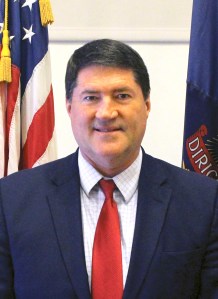
By Sen. James Libby
Hello, this is Senator Jim Libby of Cumberland County. I also represent parts of the great counties of Oxford and York. I thank you for joining me for this week’s Republican Radio Address.
As a legislator and college professor, I’m always interested in market-driven success stories. And Texas pulled off a big one earlier this year when the Lone Star State, long known for its rich fossil fuels, pushed California to second place in renewable energy production. How about that.
The nation’s so-called “dirty fuel” state overtook California, a state renowned for its far-left green energy mandates and restrictive environmental laws, to become the nation’s clean energy leader, all because their elected officials considered markets and coordination over government mandates.
No matter the industry, product or service, economic principles are the guardrails by which companies and even good governments operate. In the case of Texas, the writing has been on the wall for a while that the growing renewable energy industry would take a prominent role in the future of the nation’s energy supply.
Here in Maine, markets will also be efficient if government allows it. I recently attended the grand opening of Waltz renewable propane center in Gorham, the first of its kind in Maine. That’s right – the Waltz family invested in a new, clean fuel here in Maine; and they even had a propane-powered SUV for us to examine at the event.
We need to honor market-based investments in Maine made by people who care about our environment. Propane has a tiny carbon footprint compared to other fuels – let’s support it.
Let’s go back to the Lone Star State. Free market policies and sound economics led to a boon of solar and wind energy in Texas, a state steeped in ample sunshine and the wind created by it. Today, Texas is the only U.S. state that produces more than a third of its electricity from renewable sources; and major investments in battery storage extend that green energy well beyond sunset.
Texas hit a milestone in renewable energy production in May when it produced 19.1 gigawatts of energy from solar farms, a U.S. record. To put it into perspective, that’s enough electricity to power all of New England at peak demand.
My point here is although Texas leads the nation in fossil fuel production, its own energy industry goals led it to diversification, not government mandates and bans. Economics became the determining factor in making energy investment decisions, not politics. Government became a partner with business. The demand for affordable electricity became the motivating market factor, not misguided executive or legislative ideology.
Maine can learn a lesson or two from Texas.
I welcomed the Governor’s Energy Office’s decision this week to award a $1.62 million grant to upgrade switching stations in the Sebago region. The grant, part of a larger $6.6 million electrical grid resiliency program, will fund upgrades in CMP’s Shaw Mills project, including switching stations in Baldwin, Sebago and Standish.
My constituents in those towns have had unreliable power and internet for years; and they have been pleading for upgrades since those three towns have been among the most vulnerable in Maine for outage complications due to grid shortcomings. Citizens frustrated with both state government and CMP wrote me many letters. In turn, I worked hard on this issue – a top priority for my district, Senate District 22.
Upgrade investments are not mandates. It is overdue public investment. I embrace that.
Unfortunately, other policy decisions by State government have prioritized the investment of billions in RATEPAYER dollars in solar farms to achieve goals that may or may not help the environment. These contracts pay developers high rates for their electricity output at two and three times the wholesale rate.
This is part of what is called “net metering” program “or“ net energy billing,” which I believe is horrible state policy and a driver of our sky-high consumer electricity rates. Representatives of CMP have told me privately that they feel the same way.
The public policy shift over the past five years to favor market-altering initiatives in Maine and limit or even ban other products or services is concerning. Take the recently defeated electric vehicle mandate, for example, or the attempt to ban or limit new natural gas development in Maine. Thank goodness Republicans carried the day on those bills.
I say resist those in the Legislature who would mandate your family budget into oblivion over ill-conceived government goals and mandates. When government starts limiting choice – whether it’s how you heat your home or what powers the car you drive – we cross the line in tipping the scales in favor of one industry over another.
In contrast, a great example of beneficial economic policy in Maine is the incentive program to install heat pumps. Many families have taken advantage of that; but it’s a market-driven decision made by consumers, not government.
So, Texas spent $7 billion to upgrade its electric grid over the past 12 years. The $4.4 billion we plan to spend in Maine on solar subsidies in the next 20 years will certainly enrich developers; but I’d argue we should change course and invest some of those funds in our own projects that will have greater immediate impact on the resiliency of the electrical grid.
Thanks for listening! Again, this is Senator Jim Libby of Standish. I hope you have a great weekend!
Senator James Libby represents the communities of District 22. He is the Senate Republican Lead for the Legislature’s Education Committee and Taxation Committee.
 Maine Senate Republicans