Staff Report
AUGUSTA – A pair of bills sponsored by Maine Senate Republican Leader Trey Stewart that aim to bring millions of dollars in investments to the state were signed by Maine’s governor. Both bills, LD 1217 and LD 1951, boost new investment incentives for economic development, some of which is already occurring in the state.
The first bill, which was signed by Gov. Janet Mills on Monday, extends the New Markets Capital Investment Program by extending its related tax credit to an additional $250 million of qualifying capital projects occurring after Jan. 1, 2026. It also sunsets the current program that authorized an initial $250 million for such projects that began in 2012.
A RETURN ON INVESTMENT
Sen. Stewart, R-Aroostook, sought to renew the program during the 131st Legislature through LD 1974. However, the bill was subsequently changed to a resolve that directed the program’s administrator, the Finance Authority of Maine (FAME), to review the program before its reauthorization would be considered.
FAME conducted the review last year and in its January report to the Legislature, it found the program had resulted in the full deployment of $250 million in qualifying private investments that created or retained more than 2,700 jobs, provided a 22-to-1 return on investment to Maine’s Gross State Product and a $15.8 million positive impact on Maine’s General Fund.
“LD 1217 is exactly the type of legislation we need to support investments in our economy. The reinvigorated Maine New Markets Capital Investment Program opens the door to game-changing investments our state desperately needs,” said Sen. Bruce Bickford, R- Androscoggin, the Senate Republican Lead on the Legislature’s Taxation Committee.
Over the course of the current program’s existence, 17 companies ranging from a ski resort and paper mill to new ventures like a digital therapeutics company used $97.5 million in tax credits to expand operations or build entirely new ones in Maine. In fact, a report released by the Legislature’s nonpartisan watchdog Office of Program Evaluation and Government Accountability (OPEGA) in 2017 showed the tax credits were the primary incentive for five of the six original projects that invested in Maine.
Since OPEGA’s report, FAME determined 11 of the 17 qualifying projects were new Maine investments and over $654 million in direct and associated investments were made over the program’s seven-year tax credit period.
“We are grateful for Senator Stewart’s leadership on LD 1217 and appreciative that Governor Mills has signed the bill into law,” said Carlos Mello, chief executive officer of the Finance Authority of Maine (FAME). “The Maine New Markets Capital Investment Program is a key component of Maine’s economic development strategy as it is one of the few tools we have to attract financing for larger economic development projects in the state. We look forward to administering a new round of funding for this important program, which in prior years has spurred millions of dollars in out-of-state and in-state investments in Maine.”
MAINE’S POTATO INDUSTRY
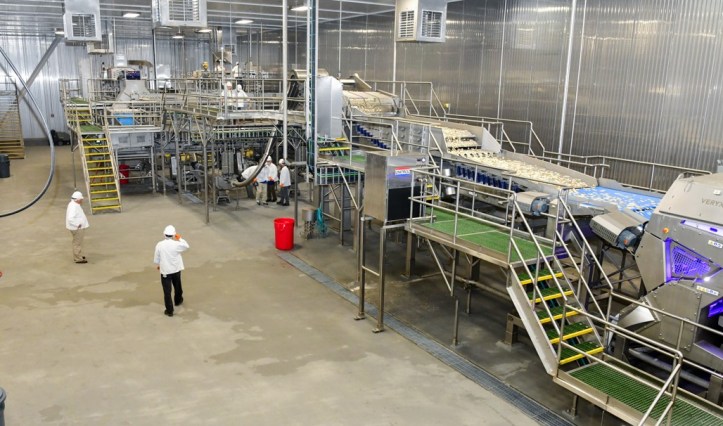
The second bill, LD 1951, was signed by the Governor last week and will shepherd in over $200 million of investment into Aroostook’s potato industry with the development of an 80,000-square-foot kettle chip factory under the Taste of Maine Potato Chip brand. The facility at the Loring Commerce Centre in Limestone plans to process potatoes from 1,500 acres of farmland initially with a goal of scaling up to 3,000 acres in the future.
“We’re excited about the Taste of Maine Potato Chip Company project,” owner Bruce Sargent said. “And we are thankful that the Legislature and the Governor see the value in our project, and the importance of bringing new jobs and economic development to The County. We want to thank Senator Stewart for his leadership in getting our proposal passed into law.”
Under the management of prime contractor Buck Construction, Inc., the project broke ground in April and is expected to be completed by mid-2026. Once operational, the plant will create a minimum of 40 full-time jobs, which will provide new opportunities for local workers and strengthen the regional economy.
“The passage of LD 1951 is great news for my district. It will bring economic revitalization to the Loring Commerce Centre and create good-paying jobs right in The County,” said Sen. Sue Bernard, R-Aroostook. “The development of the Taste of Maine Potato Chip facility will be a tremendous boost to the economy of Northern Aroostook County – all made possible by this legislation.”
For McCrum Family Holdings, LLC., the bill will finally allow them to take advantage of a refundable credit that was enacted by the Legislature in 2019 by changing the program’s requirements. In all, the company has invested about $110 million in its Washburn plant including an additional $30 million for the company’s potato products production line that went live last year.
“We are very thankful for the support of the Maine Senate Republicans with LD 1951. This bill not only supports the 145 jobs in Washurn, Maine, but allows for future growth of our business, which will increase both the labor force and the economic impact. We want to thank Senator Trey Stewart for sponsoring the bill and McCrum appreciates his collaboration with the Maine Department of Economic Development on a bill that will bring real economic development to rural Maine,” said Jason Woollard, chief financial officer and partner of McCrum. “Senator Stewart made a commitment to bring jobs and economic development to rural Maine – and he delivered on his promise. McCrum is proud to be a Maine-owned family business for the past 149 years; and because of this type of policy, we can stay competitive and continue our potato heritage in Maine for many more generations.”
The new law aims to make Maine’s food production and processing industries more competitive on the national stage. According to the Maine Potato Board, Maine’s potato industry generates about $1.3 billion a year across 54,000 farmed acres.
“The passage of LD 1951 is a major win for Maine’s potato industry and for rural communities across our state. It will create more value-added capacity for Maine potatoes, a key element to growing Maine’s agricultural sector, and presents the opportunity to incentivize food processing facilities in rural areas of our state,” said Jeannie Tapley, executive director of the Maine Potato Board. “This bill will have a major positive impact on our local communities with creating jobs, increasing the tax base, and for the potato industry, increasing acreage and market opportunities.”
RURAL ECONOMIC INVESTMENT
Both bills target economic development in Maine’s rural areas, something that has been a passion for Sen. Stewart since he was first elected to the Legislature in 2016. For him, the legislation gives the state a real chance at venture capital that otherwise goes to other New England states. “The investments enabled by LD 1951 and LD 1217 will be a boon to our state’s economy including in Northern Aroostook County and in our State’s most economically distressed areas. Combined, these two bills are likely to usher in over one billion dollars of new economic activity into Maine,” said Sen. Stewart. “These investments in Maine’s future will catalyze broader community development, from increasing property tax bases to spurring related real estate projects, workforce housing and even early childcare facilities in our rural towns.”
 Maine Senate Republicans